Friday, January 27, 2012

Fresh Start Diet

Looking to lose weight this year? It remains one of the most popular resolutions. But research shows the most successful dieters -- those who lose weight and keep it off for the long haul -- practice healthy eating and exercise habits all year long. They don’t have New Year’s diet resolutions because they don’t make big promises that are impossible to keep. For instance, if you’ve ever vowed on January 1st that “I’ll never eat ice cream again!” or “I’ll never order French fries again!” you made one of the biggest New Year’s diet mistakes -- biting off more than you can chew. Instead, set a time limit or portion limit. “I’ll only eat French fries once a month.” Or “I’ll only eat ice cream in a really small bowl.”


Whether it’s the last week of January or first day of June, there’s no time like the present for new beginnings. Here’s a simple guide to help you hit the reset button on food and fitness habits. Follow these FRESH start rules to launch a healthier new you.


Garden Fresh Flavors


F- Freshen up your food life - Think fresh fruit and veggies first. Fill up your plate with produce and go beyond the usual broccoli and green beans. Restaurant chefs are more creative than ever before with vegetable side dishes. A recent lunch at Farmstead restaurant in St. Helena, Calif. was a sensible serving of sole with lots of braised carrots and fennel lightly sauced with lemon and butter. Delicious vegetable sides at Valenza in Brookhaven include braised kale and roasted cauliflower. In veggies and grains, fiber adds good health and helps you feel full longer. So choose whole grain breads, pastas, pizza crusts and go for the brown rice instead of white. Think whole grains! The nutty flavors are palate pleasing in granola bars, cereals and your favorite shape of pasta. Sunbelt Bakery makes the best raisin and date granolas for breakfast!


R- Recognize barriers - Embrace and understand your favorite food splurges. Whether it’s chocolate cake or pasta with cheese sauce, it’s going to be tough to say ‘no’, so accept the power of your splurge foods and resolve to enjoy them in small quantities. Use a small plate to serve yourself. Research shows your mind will think it looks like a lot more food than the same amount on a large plate. Crave the bubbles in soft drinks but want something healthier? Make your own at eateries by asking for club soda mixed with a splash of orange juice or pomegranate juice.


E- Enjoy the taste of eating right – Did you know that steamed shrimp, roast beef, sirloin steak, Canadian bacon, boiled eggs, barbecued chicken and roasted pork loin are all diet-friendly lean protein choices? Feel free to add low-cal flavor with mustards, horseradish, cocktail sauce, hot sauces and salsas. Get excited about the crunch of fresh vegetables in a salad, not the croutons! The green salad served at Bistro Niko in Buckhead features the peppery punch of radishes.


S- Start new habits - Keep a list of what you’re eating and drinking for a few days. Be as specific as possible on types of foods and amounts. Don’t know what a cup of mashed potatoes looks like? Get some measuring cups out and become familiar with portion sizes. This snap shot will help you keep track of over eating and while you’re at it -- write down your physical activity. Or literally take a snap shot of meals and snacks with your phone. Research shows those who are mindful of what they eat are more successful with weight loss goals.


H- Have a plan – Eat breakfast. Schedule time to take a walk or go to that yoga class. If you’re eating out tonight, eat less at lunch and walk more tomorrow. If there’s a road trip on your schedule, pack fresh fruit and a whole grain granola bar such as the ones from Sunbelt Bakery under 150 calories per serving. Curb your hunger so you aren't tempted to stop at a fast food joint. Successful long term weight control is a balancing act.


Tuesday, January 17, 2012

Of diets and detox

Weighty Nutrition Truths 
Talk about taking one for the team!

While millions of Americans try to eat less to weigh less, a group of 25 healthy volunteers at the Pennington Biomedical Research Center in Baton Rouge agreed to pig out in the name of science by consuming nearly 1000 extra calories a day. Their mission was to help weight control researchers figure out if weight gain varies from person to person when they over-eat and how much is stored as body fat.

Did they all gain weight? Yes, they each packed on nearly eight pounds of body fat. But, the total number of pounds gained – as measured on a scale - was dependant on the percentage of protein in their meals. The group eating less protein gained less weight.

As reported in this month’s Journal of the American Medical Association eating a low protein diet (5% of calories from protein) causes the body to lose more lean body tissue compared to a normal (15% of calories from protein) or a high-protein diet (26% of calories from protein). The low-protein group gained half as much total weight as the other groups but it was due to muscle loss not because they stored less fat. In fact, Dr. George Bray, the study leader, reports that the low-protein group stored more than 90 percent of the extra calories as body fat. So, the numbers on the scale aren’t a good guide to tell you where the pounds are going.

More Protein?

Based on these new findings, there’s more reason to pay attention to protein. That doesn’t mean you have to mainline meats or protein powders. The USDA’s My Plate guidance to eat 6 to 8 ounces of protein foods a day is what’s recommended to protect your muscles. Unfortunately, research studies such as this one from Bray often get misinterpreted and misunderstood. Some may conclude eating more protein will help you lose weight; others might think limiting protein aids weight loss. Neither assumption is true. What is true is that over eating regardless of the food source leads to fat storage. No protein miracle cures, sorry.

Understanding Studies


“We get information in snippets about a study,” says Atlanata resident Robert Davis, PhD, author of Coffee is Good for You: the Truth about Diet and Nutrition Claims. “What is the whole picture? To look at a puzzle we must put all of the pieces together.” Davis’ new book debunks popular myths and points to what’s proven. He says nutrition scientists are closer to the truth now more than ever but many people are still misled by unfounded food fads such as “detox” diets. “Your body does not need to be detoxed,” says Davis referring to severely restrictive juice cleanses and regimens often including laxatives and herbal supplements. “Repeated and prolonged detox dieting can potentially lead to vitamin and mineral deficiencies, muscle breakdown and blood sugar problems.” If a “detox” plan leads to weight loss he says it’s because you’re cutting back on calories. The book includes a valuable explanation of the types of research used to study health from preliminary test tube studies to gold standard randomized clinical trials – the kind used by Bray in his weight gain research.

Monday, January 2, 2012

DishOnDieting: Time to Delve into 2012!

DishOnDieting: Time to Delve into 2012!

Time to Delve into 2012!

Tasty and Healthy Food Trends for the New Year


Can’t decide between a side of the down home locally grown vegetables or the international taste adventure of a Korean kimchee? Then you’re smack dab in the middle of two colliding culinary trends predicted for the New Year. We want the world, but we want to support local farmers and producers.

Chef Micah Willix of recently opened Latitude Food and Drink in Buckhead has found a way to satisfy both of those cravings. His globally inspired cuisine is a delicious mélange of flavors from the Mediterranean, Asia and South America all featuring many ingredients from around the southeast.

Chef Micah Willix with guests at Latitude
Latitude’s pan roasted Louisiana redfish is served with quinoa, tangerine and local winter squash; the freshly ground lamb and beef burger acquires an Italian accent with rosemary aioli and arugula. Willix says, “Latitude will be an opportunity for me to explore more options of different cuisines and cultures, but I still want to cook and create dishes that are simple and close to the source.”

Farmer Dave Taylor's Chefs' Garden for Old Edward's Inn  

More farmers on the menu. The National Restaurant Association’s annual “What’s Hot?” menu trend survey of chefs places locally sourced meats, seafood, produce as well as alcoholic beverages in the top ten for 2012. Dietitian Joy Dubost, director of Nutrition & Healthy Living for the NRA says, “Local farms and food producers have become an important source of ingredients for chefs and restaurateurs wishing to support the members of their business community and highlight seasonal ingredients on menus.”

Nutrition plus: organic and locally grown produce often tastes the best.


World Tours- “Cooking is at a crossroads where everything collides!” according to restaurant consultant, Michael Whiteman of Baum & Whiteman. Their 12th annual menu trend prediction list says from tortillas to tarragon we still want the world on our plates, “The wilder, the better. After all, if your new car’s parts come from around the world, why shouldn’t your sandwich ingredients?”


Just a tiny taste of the spice selection at the Culinary Institute of America Napa Valley campus! 

Nutrition plus: Borrowing from the world’s spice cabinet from Spanish saffron to Indian curry powders you can add flavor to food without as much salt.

Healthy Kid Stuff- Children’s menus continue to get an overhaul in 2012. Dubost says, “Nutrition - especially when it comes to children – is becoming a major focus for the nation’s nearly one million restaurants, in tune with consumers’ increasing interest in healthful eating.” The NRA’s annual convention in 2012 will feature a new Healthier Kids Fare Pavilion to showcase healthful children’s options.

Nutrition plus: The NRA’s Kids Live Well program helps restaurants develop menu items that meet specific and strict nutrition criteria.


Veggie Variety- Side dishes continue to gain gourmet steam as chefs put more effort into quality and quantity of choices. Willix’s warm beets with tarragon and smoked fingerling potatoes are show stoppers.

Nutrition plus: easier to eat your vegetables.

Gulping the Garden- Think way beyond the Bloody Mary as kitchens and bars continue to collaborate in 2012. The category of “culinary cocktails” made the NRA’s list of top trends. Mixologist Thomas Keenan at the Old Edwards Inn in Highlands, North Carolina creates refreshing blends of beet juice, broccoli, cucumber, herbs and edible flowers get a kick from vodka, tequila, rum, brandy or moonshine.


Nutrition plus: The drinks are made with vitamin and antioxidant rich fresh fruit and vegetables.


Would you like a little or a lot?

Have it Your Way- Expect an easier time asking for ‘sauce on the side.’ Mintel Research predicts more consumer control in 2012 as customized ordering systems will continue to flourish, as will greater flexibility in menu design.

Nutrition plus: Special menu requests help you control the salt, fat and calorie content of your meal. Gluten free choices more mainstream too.


Tuesday, December 20, 2011

Color Me Slim


Deck the halls with boughs of holly, tinsel and lights. Put on sparkly holiday fashions and let your makeup glow. But when it comes to going all out enjoying the festive meals and sweet goodies of the season remember to accessorize with care. Go easy on high calorie add-ons such as nuts, cheese, cream sauces, dips, gravy, butter, sugar and whipped cream – small additions that can add up to plenty around your waistline. That dress you bought on sale back in November for a New Year’s Eve bash may not zip up as easily now. Trim calories wherever you can so you can use them on the splurge foods you don’t want to miss.

Of course, managing calorie intake isn’t a simple task and is especially challenging during the holidays. On a typical day, a person makes over 200 decisions about food. That’s according to Dr. Brian Wansink of Cornell University, author of Mindless Eating: Why We Eat More than We Think. Wansink’s research was the first to show that choosing a smaller plate during a holiday buffet, for instance, would help folks think they were eating more than they did. New research to be published in the Journal of Consumer Research reveals that even plate color can affect how much we eat – and there’s certainly plenty of color festooning holiday tables.

Wansink says, “In a groundbreaking new study we found that the color contrast between the plate and food may have a tremendous impact on how much people serve themselves.” Partygoers in the study were directed to buffets serving pasta with either tomato or Alfredo sauce and randomly given red or white plates. Participants who had low-contrast between the food and plates (red pasta on a red plate, or white pasta on a white plate) served themselves approximately 22% more than participants with high-contrast food and plates (red pasta on white plates, or white pasta on red plates). So, to help trick yourself into eating less, choose dinnerware that contrasts the color of your food. Whether on paper or china the serving size of mashed potatoes, for instance, is more obvious on bright red and green holiday plates.

Bobbie Batista, Teya Ryan and Carolyn O'Neil at Turner Reunion Holiday Party
Holiday Helpers

Where the bowls are- Don’t sit so close to the buffet table. Wansink’s study “Serve Here, Eat There” showed that leaving some distance between you and the food resulted in men eating 29% fewer and women 10% fewer calories.


 Liz McDermott in Sleek Chic   

Wear Something Sleek- Wearing body conscious clothes will serve as a reminder that you can't overeat advises dietitian Heather Bauer, author of “Bread is the Devil” out in January. She says, “Guys, you don't get a free pass here.”

Be Sociable- Wait at least 20 minutes before eating at an event. Bauer suggests, “Make at least one full lap around a party to greet people before starting in on the appetizers.”

Don’t Go Hungry- Consider it nutrition pre-gaming says Bauer. By eating a pre-party snack you won’t be so ravenous that hurdle past other guests to get to the parmesan artichoke cheese dip.

Give the Gift of Health - Here are a few bright ideas for last minute gifts in the

healthy eating category.

 Salad spinner- create a gift basket with olive oils, mustards and vinegars.

 Slow cooker- one of the best ways to tenderize tasty cuts of lean meat.

 Microplane grater - for zesting citrus, grating whole spices to add flavor without calories

 Specialty spices – more expensive spices like cardamom, vanilla, saffron, smoked paprika and curry powders are elegant gifts to add flavor and healthy antioxidants with no calories.

 Immersion blender – make rich and creamy textured soups and sauces from cooked vegetables without the need for much or any cream.

 Restaurant guides- a Zagat Guide for your friend’s city will help them plan what and where to eat when dining out. Whether they’re craving Beef Bourguignon or Barbecue they can find names and locations of restaurants, check out an eatery’s menu and select healthier menu options ahead of time. The latest Atlanta Zagat Guide is the 19th edition.

Tuesday, October 25, 2011

Fall Harvest of Fiber


Chef Art Smith with gift of green tomatoes from my garden.


The menu at newly opened Southern Art in Buckhead may feature selections from the artisanal ham bar and chef Art Smith’s Buttermilk Fried Chicken, but closer inspection reveals a variety of ways to enjoy eating more fruits and vegetables, too.


Gotta show the Buttermilk Fried Chicken!


Art Smith, who has famously cooked for Oprah Winfrey and more privately lost a lot of weight and improved his own health through good nutrition, leads a culinary team serving up fiber rich side dishes such as okra, Brussels sprouts, greens, cream-less creamed corn, grilled green tomato and apple relish, roasted sweet potatoes and beets. Since the restaurant is located in the Intercontinental Hotel, Southern Art serves lunch and breakfast. A high fiber way to start the day is the Art Start which features steel cut oatmeal and fresh berries with scrambled egg whites and yogurt.

 What's the fuss about fiber?
Bet you wear a seatbelt, but are you eating enough fiber to protect your health? One of the most successful recent health campaigns includes a simple phrase that conveys action and consequence- “Click or Ticket.” The power of a persuasive message is what nutrition experts hope will help change eating habits with the slogan “Fruits & Veggies- More Matters.” Increasing consumption of fruits and vegetables provides a cornucopia of health benefits from disease prevention to weight control. While a host of vitamins, minerals and other nutrients such as antioxidants are found in the produce section; fiber is a key component. The sad truth is that most Americans consume only 12 to 14 grams of fiber per day, falling far short of the recommended intake of 20 to 35 grams of fiber a day.

Where’s the Fiber?

Most fiber comes from plant foods, like beans, broccoli and oatmeal. It’s the part of the plant that your body just can’t digest, so it pretty much comes out the way it goes in, making it calorie-free. Fiber in foods helps keep you from suffering crazy highs and lows in blood sugar levels, they help lower cholesterol, prevent constipation and they may even reduce your risk of some types of cancer. While your body can’t digest fiber, the “good” bacteria that are permanent residents in your intestinal tract, feast on all that passes by. The result is a bigger, stronger bacterial force that may help keep your immune system healthy. And in keeping with our theme of a happier body, high-fiber diets slow down digestion, making you feel full longer, and delaying the munchies.

A Tale of Two Fibers


There are actually several kinds of fiber, but the two fiber groups you should make a mental note of are soluble and insoluble

Soluble Fiber: The kind of fiber in oat bran, apples and beans acts kind of like a sponge in the digestive tract and has been shown to grab onto cholesterol and take it down the line. It's also kind of filling so it helps keep your appetite in check.
Guests are greeted with veggies at Southern Art


Insoluble Fiber: The kind of fiber in the strings of celery, apple peels, asparagus, kale or in cereal or rice bran is indigestible so working as “nature’s broom” it works to sweep the intestinal tract clean. Not to risk sounding like a laxative commercial, but this kind of fiber keeps you, ah, regular.


Dishing Up Fiber


Fiber Find Grams of fiber

Lentils (1/2 cup) 8


Raspberries (1 cup) 8

Beans, pinto (1/2 cup) 6

Whole wheat pasta (1 cup) 6

100% Bran (3/4 cup) 5

Dried figs (2) 5


Roasted Soy nuts (1 oz) 5

Almonds (1 oz) 4


Broccoli (1 cup) 4

Brown rice (1 cup) 4

Dried Plums (prunes) (1/4 cup) 4


Peas, green (1/2 cup) 4

Pears (1 medium) 4


Spinach, fresh (1cup) 4

Banana (1) 3


Oatmeal, instant, plain (1 packet) 3

Strawberries (1 cup) 3

Whole wheat bread (1 slice) 3 

Wild rice (1 cup) 3
 
Southern Art's Ham and Biscuits with Okra!


Tuesday, August 30, 2011

Sack Lunch Savvy for School


Back to school fashions are strutting their stuff in the cafeteria, too. Brown paper bags are fading away and insulated lunch containers are taking over.
The Little Mermaid for Little Lunchers 

Bento Boxes are great for kids who don't want food "to touch" 

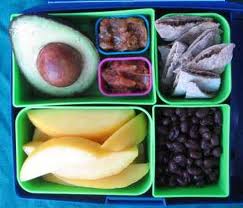
 The simple sandwich is being replaced by a selection of bites presented bento box style, “It’s kind of like making your own “lunch-ables," says Sandy Nissenberg dietitian and author of Brown Bag Success: Making Healthy Lunches Your Kids Won't Trade. “You buy a plastic container and fill the compartments with fun lunch options like cherry tomatoes, cheese cubes on a kabob, turkey tortilla roll-ups, cold chicken pasta salad or mini chicken drumsticks. Add a fruit on the side, get milk at school and you’re good to go.” Nissenberg likes this mix-and-match small bites approach because it appeals to child-sized appetites and lunch periods at most schools are pretty short, “By the time a child finds a seat, talks to his friends, and finally pulls out his lunch, there may be only 15 minutes to eat. Most large lunches will probably get thrown out." Easy to peel Clementines or pre-sliced oranges and apples are more likely to be eaten than whole fruit. That’s especially true for kids with loose teeth or braces.  
Kids don't know the half of it.....half should be fruit/veggies. 

My Lunch MyPlate
Whether the cafeteria bound container is festooned with Hello Kitty, Justin Bieber or the Atlanta Falcons’ logo – what’s inside matters to child nutrition experts. The new USDA My Plate nutrition icon indicates one half of a healthy plate should be filled with fruit and vegetables, with the two other quarters occupied by a lean protein and a whole grain starch. To complete the meal -on the side of MyPlate is a cup of milk. This same food philosophy can be used to fill a lunch box. How do you get beyond the usual carrots and celery sticks solution?  Liz Weiss, dietitian and co-author of No Whine With Dinner suggests mixing in chickpeas and blanched broccoli florets to pasta salads and add variety to veggie snack offerings, “Cucumber wheels, red or orange bell pepper strips, sugar snap peas or snow pea pods. Add some Ranch or other dressing like hummus for dipping because the oil in these dips actually helps kids absorb more nutrients from the veggies.”  
What about the teens and ‘tweens easily distracted by the lunch time social hour? That table of ‘gossip girls’ busy checking out the handsome new boy don’t want to be seen gobbling a big sandwich like a hungry ranch hand. The new breed of whole grain sandwich or bagel ‘thins’ might be a better fit with 100 calories and 5 grams of fiber. For something sweet yet figure-friendly they may prefer to daintily dip grapes, strawberries or pineapple chunks into protein packed Greek yogurt.

Food Safety Patrol
Thrown in a locker, stuffed in a backpack or stashed under a desk for several hours, sandwiches and other lunch foods can linger in the bacteria friendly room temperature “danger zone” between 40 and 140 degrees for too long.  Researchers at the University of Texas in Austin found that 95% of packed lunches in a recent study were at an unsafe temperature. That’s why insulated lunch bags and boxes- many with a space to add an ice pack- get an “A” from food safety experts. Dietitian Jo-Ann Heslin author of the nutrition counter series for Pocket Books suggests you start thinking ‘cool’ the night before, “If you pack lunch in the morning, chill the lunchbox in the refrigerator overnight. If you pack lunch at night, put the food in the lunchbox and refrigerate both overnight. This helps keep all foods cooler longer.”  A thermos can keep hot soups hot but it can keep salads cool, too so they’re still crisp and cold at lunch time. Note: Perishable foods can sit in the danger zone for up to 2 hours before the lunch becomes risky.
Some lunch bags are built to carry cold packs 
                        
Something Extra.
Since fast food restaurants succeed in attracting attention to their childrens’menus with toys and prizes perhaps two can play at this game. Nissenberg suggests, “Don't forget to add a character napkin for fun or maybe an inspiring note or fun message. It will bring along a smile during lunch.”